
Empowering People. Uniting Communities.
Qbix is the world's Social Operating System — a free, open-source, unified alternative to Big Tech platforms. Over 10 years in the making, it gives any organization the infrastructure to build apps that connect people, handle real-time collaboration, and scale to millions of users, without surrendering data, identity, or brand to a centralized corporation.
"We aim to do to Facebook and Google what the Web did to AOL and CompuServe."

8 million+ people · 95+ countries · AGPL-3.0 · 80 repositories
- What Is Qbix?
- The Plugin Architecture
- Core Plugins
- Features Out of the Box
- For Businesses & Startups
- For Developers & Teams
- For Designers
- For Interactive Marketing Agencies
- Technology Stack
- Screenshots & Videos
- Get Started
A graphical operating system gave developers a common language of windows, buttons, menus and files — so they could reason on a higher level and ship faster, while users gained a consistent experience across every application. Qbix does the same thing for social web development.
Instead of reinventing user accounts, real-time messaging, notifications, invitations, access control, and payments in every new project, you build with Qbix's reusable parts. Speak with your clients in terms of apps, communities, roles, invitations, real-time updates, videoconferencing, credits, rewards, and payments — not HTTP verbs and database schemas.
It runs on every device — desktop browsers, tablet browsers, mobile browsers, native iOS (Cordova), and native Android (Cordova) — and integrates with email address books, mobile contacts, and Facebook friend lists right out of the box.
The deeper goal is structural: move the Web from Feudalism to a Free Market. Foster an open, permissionless ecosystem where any startup or existing organization is in charge of its own data, identity, relationships and brand.
Qbix is organized around a lightweight core framework (Platform) and a growing ecosystem of plugins — self-contained, installable modules that each add a coherent area of functionality. Plugins can depend on each other, override each other's behavior, and be packaged and shared. The installer tracks versions and migrations across every app and plugin in the stack.
The pinned repositories represent the essential plugins. There are currently 80 public repositories in this organization.
| Plugin | Description | Repo |
|---|---|---|
| Platform | The core framework: routing, streams, tools, themes, CLI installer | Qbix/Platform |
| Users | User registration, login, sessions, pseudonymous identity, signed requests | Qbix/Users |
| Streams | Real-time collaborative streams: posting, subscriptions, access control, forks | Qbix/Streams |
| Assets | Credits, badges, leaderboards, payment processor integration (Stripe etc.) | Qbix/Assets |
| Media | Video, audio, livestreaming, web-based videoconferencing | Qbix/Media |
| Communities | Groups, roles, subchapters, membership management | Qbix/Communities |
| Calendars | Events, scheduling, calendar feeds | Qbix/Calendars |
| Places | Location-aware features, maps, geospatial queries | Qbix/Places |
| AI | Social AI integration for community engagement | Qbix/AI |
| Telegram | Telegram bot and channel integration | Qbix/Telegram |
| EngageUsers | Example app: leveraging Social AI in communities | Qbix/EngageUsers |
A partial list of what you get without writing infrastructure code:
Identity & Social
- User signup via email, mobile number, or Facebook
- One-step viral invitation system via SMS, email, or Facebook
- Address book and contact list import
- Pseudonymous or named profiles
Real-Time Collaboration
- Streams: the core abstraction. Like Unix files, but social — they support joining, leaving, posting messages, real-time updates, subscriptions, and granular access control
- Socket.io-based live updates; caches that almost never go stale
- In-app chat and messaging
- Web-based videoconferencing and Facebook livestreaming
Community Infrastructure
- Groups, subchapters, roles and permissions
- Events and calendars
- Location-based features
- Content and media management
Commerce & Engagement
- Credits, badges, leaderboards (Assets plugin)
- Payment processor integration (Stripe and others)
- Virality and engagement metrics (Metrics plugin)
- Notifications: push, email, SMS
Platform Qualities
- Runs on desktop, tablet, mobile browser, native iOS, and native Android from a single codebase
- Automatic database sharding for smooth scaling, 99.99% uptime
- OWASP-aligned security practices, fine-grained access control
- Override almost anything; plays nicely with Zend and other frameworks
- Team-friendly: per-developer local config, shared version/migration tracking
Use Qbix to build a social app, or turn your existing application into one. If you have an app that people use to do X, Qbix lets you add:
- User signup that just works — email, mobile, or Facebook, with all the security edge cases already handled
- Viral invitations — one-step SMS, email, and Facebook invite flows so growth doesn't depend purely on word of mouth
- Engagement — real-time collaboration across every device gives users reasons to come back
- Monetization — badges, credits, payment processors, subscriptions
- Measurement — virality and engagement analytics built in, alongside Google Analytics integration
Qbix can help you design and build the app, and if your app turns out to be broadly useful, discuss giving it a head start with Qbix's existing user base of 250,000+ monthly active users.
- Build once, run everywhere — desktop, tablet, mobile browser, native iOS, native Android
- Modular — package any new functionality as a plugin, install and re-use across projects, sell on the marketplace
- Streams abstraction — just like Unix lets you work with files, Qbix lets you work with streams. Real-time updates, subscriptions, notifications, and access control come for free
- Scalable by design — automatic DB sharding, smooth scale-up while staying online
- Efficient — minimizes server round-trips, caching at all layers kept fresh by socket.io
- Flexible — override almost anything, import from Zend or other frameworks without conflicts
- Built for teams — per-developer local config, shared installer tracking versions and migrations per plugin
Support, certification, and training available from Qbix, Inc.
🔗 Learn more · Developer Guide · Video Tutorials · Community Forum
- Separation of concerns — designers work on themes without touching application logic; developers work on logic without touching themes
- Multiple targets — themes work across desktop, tablet, and mobile orientations and touch events out of the box
- Dynamic interfaces — virtual pages that load dynamically while correctly handling browser history and the back button, using HTML5
- Reusable building blocks — self-contained tools that anyone can place on pages
- Live front-end scripting — with basic JavaScript, listen to socket.io stream messages for real-time UI updates
- Theme marketplace — package and sell polished themes; every app using your theme gives your brand exposure
Qbix was built in part by industry veterans who spent years designing social media campaigns and Facebook apps. Quick turnaround, flexibility, and reliability are baked in:
- Separation of concerns — designers create themes first; developers wire up back-end support when the project kicks off; sysadmins and testers operate in a common structure
- Reusable building blocks — demos can be thrown together quickly; earlier projects accelerate later ones
- Flexible and interoperable — back-end and front-end APIs designed to play nicely with everything
- Viral mechanics built in — one-step invite system, engagement tracking, virality metrics
- Scales on viral days — DB layer designed for smooth scale-up without downtime
Back End
- PHP — runs on any environment with PHP 5+
- MySQL — primary data store (additional adapters in progress)
- Node.js — optional but recommended; enables real-time updates, notifications, and socket.io
Front End
- Browsers — efficient web app libraries for desktop and mobile browsers
- Cordova / PhoneGap — native iOS and Android apps with phone contact list integration
- jQuery — used by select plugins on the front end
- Socket.io — real-time UI updates, connected to Node.js on the back end
Tested across platforms via BrowserStack — desktops, laptops, tablets, and mobile phones, web and native.
Platform screenshots:
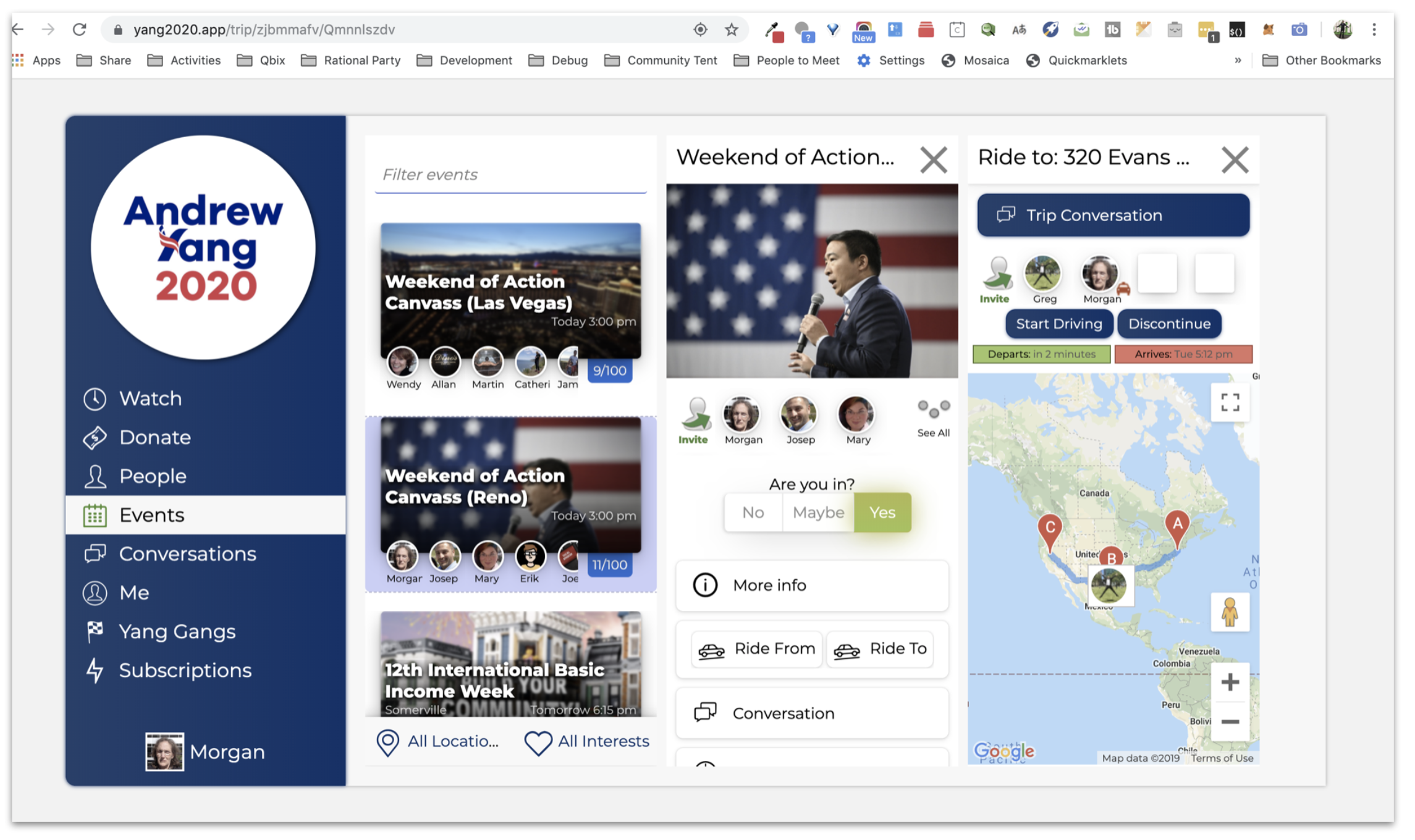
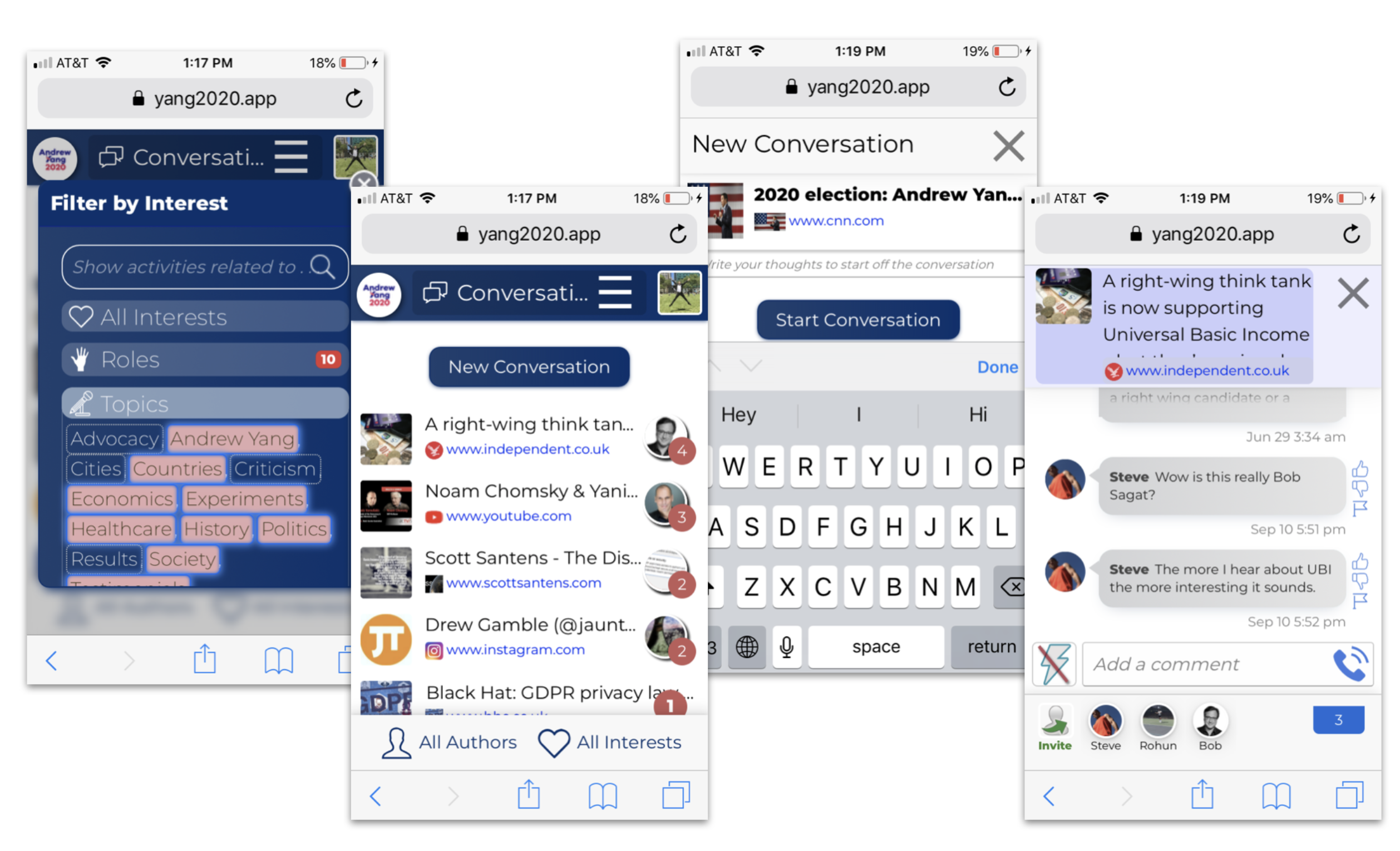
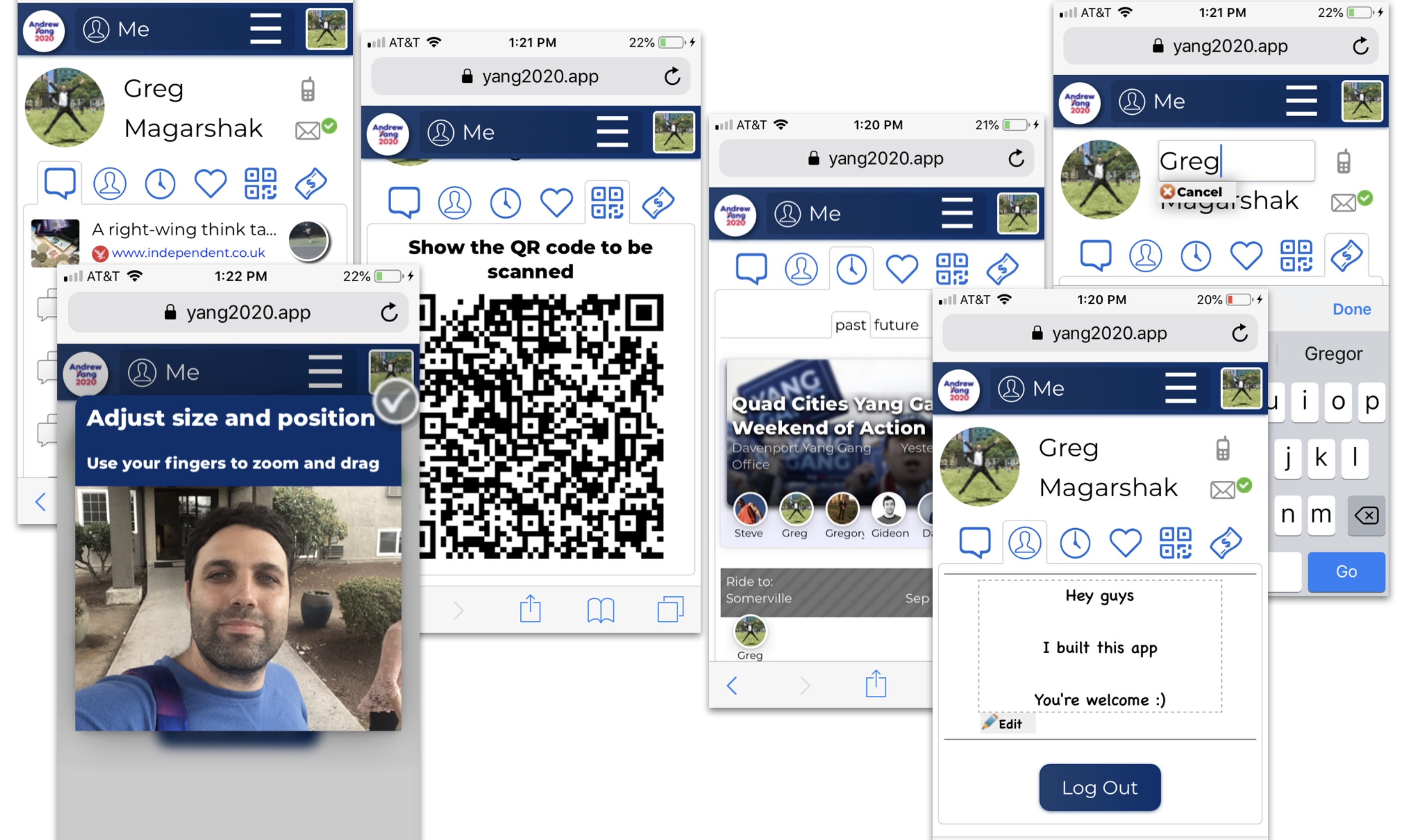
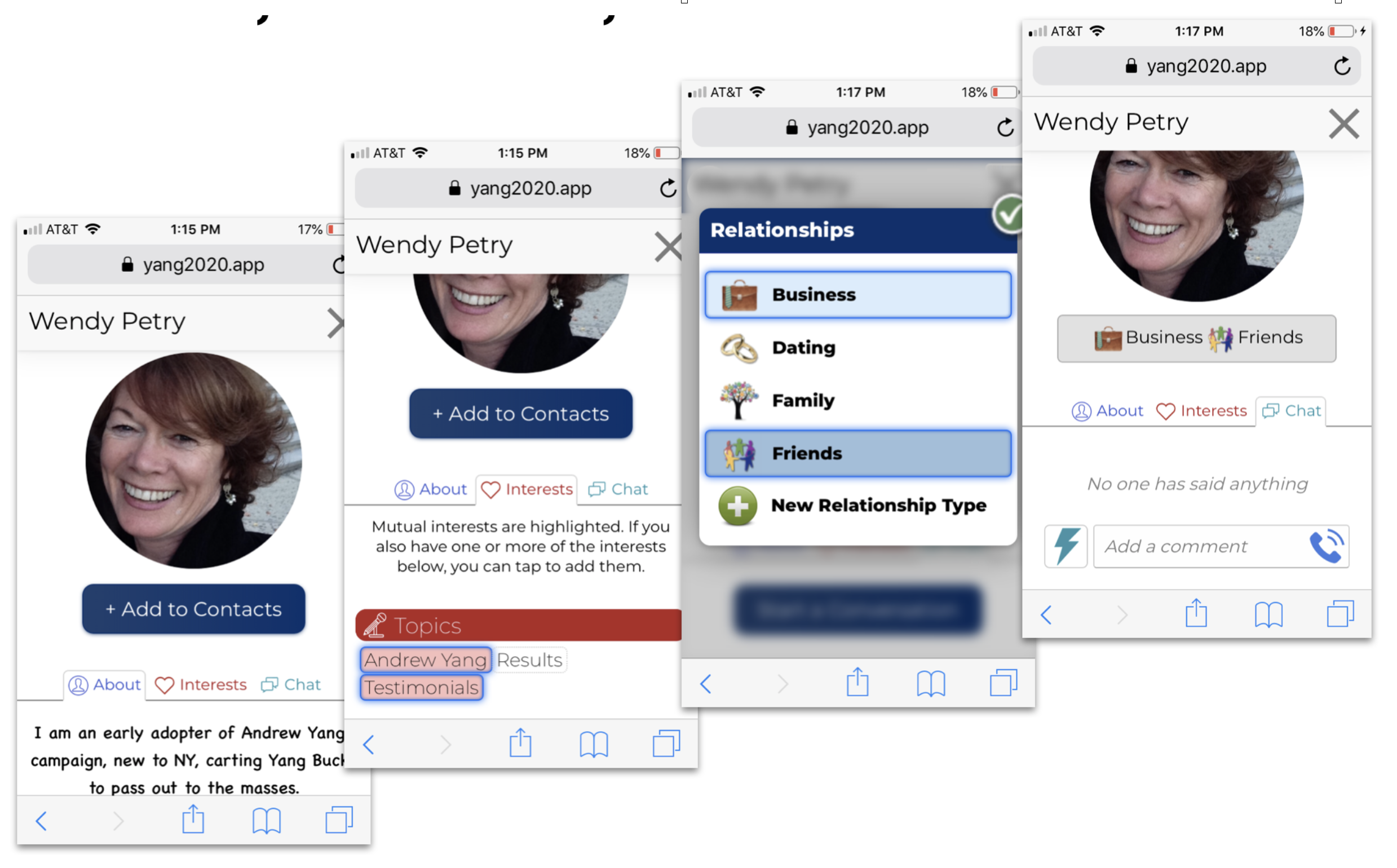
Feature demos (click to watch):
| Chat | Videoconferencing | Events | Rides |
|---|---|---|---|
 |
 |
 |
 |
| People | Payments | Notifications | Edit HTML |
|---|---|---|---|
 |
 |
 |
 |
The vision for Social AI in communities:



3-Minute Showcase — one app you can build with Qbix:
- Platform Portal: qbix.com/platform
- Developer Guide: qbix.com/platform/guide
- Video Tutorials: qbix.com/platform/tutorials
- Token Economics: QBUX Whitepaper
- Community Forum: community.qbix.com
- Press:
Qbix is the social infrastructure layer underlying Intercoin — blockchain applications for communities. All platform code is AGPL-3.0 licensed.